

Dr. Kevin Chen compares classical Taoist texts with modern research on Bigu fasting, Internal Alchemy and Qigong, and Fangzhongshu sexual nourishment. The overview distinguishes philosophical metaphors and potentially useful wellness principles from unsupported claims and historical misconceptions.
It emphasizes moderation, mind-body regulation and respect for natural limits while warning against prolonged unsupervised fasting, improper meditation, forced ejaculation and exploitative energy-harvesting practices. The article presents these traditions as integrated lifestyle approaches rather than secret methods for achieving longevity.
Ancient Texts vs Modern Scientific Evidence : What Do They Really Have in Common?
Can Taoist Bigu, Qigong and sexual‑nourishment practices improve longevity? Dr. Kevin Chen compares Ancient Texts vs Modern Scientific Evidence on Daosecrets.net.
Daoist tradition has preserved three renowned longevity practices: Bigu (grain‑avoidance fasting), Internal Alchemy (Qigong meditation), and Bedroom skill (Taoist sexual nourishment). Many modern readers misinterpret these disciplines either as magical esoteric tricks or dismiss them as outdated superstition.
Written by Dr. Kevin Chen, retired professor of University of Maryland School of Medicine and Taoist practical researcher, this overview article reviews original ancient Taoist texts alongside peer‑reviewed modern clinical and laboratory research. It separates empirically‑valuable wellness insights from dangerous historical misconceptions, highlights critical safety warnings, and explains how these ancient ideas may be reasonably adapted for 21st‑century everyday life. This is an introductory survey; follow‑up deep‑dive articles will be published on Daosecrets.net.
Throughout Chinese history, many well‑known Taoist physicians and practitioners such as Ge Hong, Tao Hongjing, and Sun Simiao enjoyed remarkably long lifespans, maintaining mental clarity and physical vitality through turbulent eras. Ancient Texts vs Modern Scientific Evidence, their legacy is more than folk legend: it forms a coherent system of life‑nurturing practices.
Taoist tradition summarizes its core longevity approaches into three major disciplines: Bigu (grain avoidance / fasting practice), Internal Alchemy (Qigong meditation), and Fangzhongshu (Taoist sexual nourishment).
These ancient methods are often misunderstood. Some people treat them as magical esoteric secrets and blindly follow every claim; others dismiss all of them as old‑world superstition.
As both a medical school researcher and long‑term Taoist practitioner, I will examine these three longevity paths in this overview article. We will look at original classical texts, compare against modern clinical science data, and separate time‑tested insights from dangerous historical limitations. This is an introductory survey. In future articles on Daosecrets.net, Ancient Texts vs Modern Scientific Evidence, we will dive deep into each subject, please follow our site for upcoming in‑depth reports.

-
Bigu (Taoist grain‑avoidance practice): Metabolic adjustment, not starvation
Key points from classical Taoist texts
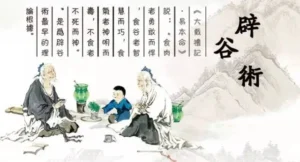
Bigu, also known as que‑gu or xiu‑liang, can be traced back to Zhuangzi (Nan Hua Jing): “On Mount Miaogu‑she lives a divine being; she does not eat the five grains, but inhales wind and drinks dew.”
The Mawangdui silk manuscript Que‑Gu Shi‑Qi Pian is our oldest surviving practical text for Bigu. It pairs grain‑avoidance with breath‑practice, rather than simply going without food.
Later works including Baopu‑zi Nei‑Pian, Huang‑Ting‑Jing, and Zhong‑Lu Chuan‑Dao‑Ji clarify essential principles:
- True Bigu is a natural outcome when internal vital‑qi becomes abundant (“Qi full, no desire for grains”), not forcing oneself to stop eating as a technique. Zhong‑Lu inner alchemy stresses that reduced desire for food comes as cultivation matures, it is not the starting point.
- Ge‑Hong insisted that Bigu must be combined with herbal supplementation and breathwork. Ancient Texts vs Modern Scientific Evidence, he warned against fraud practitioners who pretended to fast while secretly consuming food, and stated Bigu alone cannot grant immortality.
- From Huang‑Di Nei‑Jing comes the critical safety rule: Stomach‑qi is fundamental to human life; without stomach‑qi, life cannot sustain itself. Any fast‑like practice must never damage digestive foundation.
| Important note: Phrases such as “inhale wind and drink dew” are poetic philosophical metaphors. They were never meant literally to teach people to survive only on air. |
Modern scientific review & experimental data
Modern research correlates Bigu principles with calorie restriction, intermittent fasting, fasting‑mimicking protocols. Ancient Texts vs Modern Scientific Evidence, its core biological mechanism is autophagy, discovered by Yoshinori Ohsumi, awarded the 2016 Nobel Prize in Physiology or Medicine: short‑term nutrient limitation triggers cells to clear damaged and aged cellular components for internal repair.
- Animal studies: Multi‑decade rhesus monkey calorie‑restriction trials show adequate‑nutrition 30% calorie reduction delays age‑related disease and improves survival rates. Drosophila research shows time‑restricted night fasting can extend lifespan 13‑18%.
- Human CALERIE clinical trial: Healthy adults with moderate 25% calorie reduction showed improvements in blood pressure, lipid profile, insulin sensitivity and markers for fatty‑liver, with all‑cause mortality risk reduced 10‑15%.
- Research published in Cell‑Metabolism: Five‑day fasting‑mimicking intervention activates longevity gene SIRT1, supports immune‑cell renewal and lowers chronic inflammatory markers.
Critical safety warnings:
Prolonged total food deprivation causes muscle loss, electrolyte imbalance and hormonal disruption. People with BMI<18.5, pregnancy, type‑1 diabetes, severe liver/kidney disease must never attempt full bigu‑style total fasting.
Historical Taoist bigu included saliva swallowing, herbal supports. Ordinary modern people should never attempt long‑term complete fast unsupervised at home, medical pre‑assessment is essential.
Rational reflection
The most valuable lesson Taoist Bigu offers modern readers is not multi‑month complete grain‑avoidance, but the insight: over‑eating burdens our bodies; periodic metabolic rest supports repair.
In ancient times many people consumed heavy, rich diets; Bigu functioned as periodic therapeutic adjustment. Yet classics repeatedly warn us not to override our stomach‑qi out of stubborn pursuit of spiritual feats.
For modern‑day laypeople, we can adopt its core wisdom: eating to seven‑parts full, practicing mild intermittent fasting. There is no need to replicate legendary months‑long grain‑avoidance from old texts.
| Coming soon: Deep‑dive article: Mawangdui Que‑Gu Shi‑Qi Pian: History, practice and contemporary risks of ancient Qi‑absorbing fasting. |
-
Internal Alchemy (Qigong practice): Dual cultivation of nature & vitality
Key points from classical Taoist texts
Internal Alchemy (Neidan) forms the main pillar of Taoist longevity thought. Zhou‑Yi Can‑Tong‑Qi, known as “the king of all alchemical texts”, applies cosmic yin‑yang principles to the human body’s essence‑energy‑spirit (Jing‑Qi‑Shen), shifting focus away from mineral outer‑elixir toward inner human cultivation.
Zhuangzi provided early mental‑cultivation foundations: Xin‑Zhai (heart‑fasting), Zuo‑Wang (sitting‑forgetting), “the true man breathes down to his heels”.
Huang‑Di Nei‑Jing: “Be tranquil and empty, genuine‑qi follows; keep your spirit inside, where can disease enter?” “Breathe essence‑qi, stand guard over your spirit, your muscles and flesh become unified.” These lines establish foundational breath‑regulation and mindful‑presence practice.
Zhong‑Lu Chuan‑Dao‑Ji and Ling‑Bao Bi‑Fa lay out progressive stages of inner alchemy: Lian‑Jing‑Hua‑Qi (refine essence into energy), Lian‑Qi‑Hua‑Shen (refine energy into spirit), Lian‑Shen‑Huan‑Xu (refine spirit return to the void).
The Ming‑era classic Xing‑Ming‑Gui‑Zhi formulated the principle of Xing‑Ming Shuang‑Xiu (dual‑cultivation of innate‑nature and life‑vitality): “Cultivating nature but neglecting vitality is the first fault of practice; cultivating vitality but neglecting nature leaves spirit unenlightened.” Meaning psychological‑spiritual work and bodily‑physical training cannot be separated from each other.
Core concepts: Guarding the One (Shou‑Yi), inner visualization, breath‑guiding, Hui‑Guang‑Fan‑Zhao (turn awareness inward), “Following along leads to being human; reversing leads to immortality”. The core is drawing mental energy back inward, instead of dissipating it toward outer stimulation.
Modern‑day scientific review & experimental data
Neidan’s sitting meditation, diaphragmatic breathing and inner visualization correspond with modern mindfulness meditation, diaphragmatic breathing and mind‑body intervention therapy.
- Telomerase research: A 12‑week meditation program demonstrated significantly increased telomerase activity, reduced oxidative‑stress markers and cortisol (stress‑hormone), raised BDNF (brain‑derived neurotrophic factor), with statistically significant differences p<0.05. Meditation cannot directly lengthen telomeres, but it modulates markers linked to cellular aging.
- Diaphragmatic slow‑breath training (analogous to Taoist embryonic‑breathing): 8‑week practice lowered salivary cortisol 20‑32%, calmed over‑active HPA‑stress axis, improved heart‑rate‑variability and parasympathetic nervous‑system function, supporting sleep and stable blood‑pressure.
- Neuro‑imaging studies: Long‑term meditators show thicker prefrontal‑cortex, slower age‑related brain atrophy, better emotional regulation capacity.
Important risk note: Improper practice can produce mental‑emotional disturbance known in traditional circles as “deviation”. Obsessive forced concentration and compulsive sitting can trigger anxiety and somatic delusion. Classical texts repeatedly warn that inner alchemy ideally requires qualified guidance. Avoid blindly learning complicated techniques purely from internet resources.
Rational reflection
Internal Alchemy is not supernatural magic. It represents a complete mind‑body regulation system: using breath, stillness and inward awareness to reduce mental over‑consumption, balance autonomic nervous‑system and improve mood and physical condition.
Terms such as “refine essence into qi” are ancient metaphorical language, describing endocrine, neuro‑immune regulatory shifts. We should not literally map symbolic terms like dragon‑tiger, lead‑mercury, kan‑li to physical anatomical structures.
| Coming soon article: Xing‑Ming‑Gui‑Zhi Dual‑Cultivation: How ancient inner‑alchemy wisdom can apply for modern‑day people. |
-
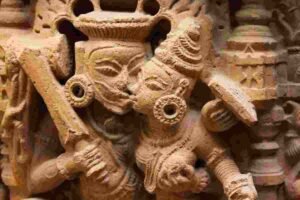
Fangzhongshu (Taoist sexual nourishment): Misunderstood yin‑yang balance practice
Key points from classical Taoist texts
Most modern readers associate Fangzhongshu purely with sexual tricks. Returning to original texts, mainstream Taoist thought centers on preserving essence, appropriate regulation, seven‑injuries eight‑benefits: joy with moderation, harmony without harm; balance rather than indulgence was the priority.
- Mawangdui silk manuscripts Tian‑Xia‑Zhi‑Dao‑Tan and He‑Yin‑Yang: earliest surviving texts, describing what sexual behaviours cause harm and what bring benefit, warning against excessive leakage of vital essence.
- Huang‑Di Nei‑Jing: “Understand seven‑injuries and eight‑benefits, then yin‑yang can be balanced; ignorance brings premature aging.” It strongly criticizes “drunken intercourse, exhausting essence by desire, dissipating one’s true‑qi”.
- Baopu‑zi Nei‑Pian (Ge‑Hong): The core purpose of fangzhongshu is “return essence to nourish the brain”, yet practicing fangzhongshu alone cannot grant immortality. It must combine with breath‑practice and herbal‑nourishment. Ge‑Hong sharply condemned “stealing yin‑yang” exploitative ideas.
- Sun‑Si‑Miao Qian‑Jin Yao‑Fang: Provides age‑related frequency suggestions, principle: pleasure with moderation, harmony without harm. Rejects both total forced celibacy and unrestrained indulgence.
- Later Zhong‑Lu inner‑alchemy elevated this further: The yin‑yang union described in old sexual texts becomes a metaphor for heart‑kidney interaction (dragon‑tiger intercourse) inside one’s own body. Highest‑level cultivation does not rely on a partner; harmony of yin‑yang is realized within oneself.
| Caution: Many later popular folk manuscripts distorted original teachings, creating exploitative “cai‑bu (energy‑harvesting)” doctrines, these do not represent authentic Taoist main‑stream ideas. |
Modern‑day scientific review & experimental data
Modern sexology, endocrinology and psychology help us separate useful insights from dangerous misconceptions:
Observations worthy of consideration:
- Consensual, moderate and stable intimate relationships can reduce stress‑hormone cortisol, raise oxytocin and endorphin levels, benefiting sleep, mood and immune function such as IgA antibody levels.
- The ancient “seven‑injuries eight‑benefits” principle essentially advises avoiding sexual activity when drunk, exhausted or recovering from serious illness, consistent with contemporary sexual‑health guidance.
Claims lacking modern‑medical support, carrying real‑world risks:
- “Hold back ejaculation for returning‑essence‑to‑brain”: Modern andrology shows forced retrograde or withheld ejaculation raises risk for prostatic congestion, prostatitis and ejaculatory‑dysfunction. Not recommended for ordinary people to practice.
- “Cai‑yin‑bu‑yang / harvesting energy from partner”: Treating another human‑being as an energy‑source violates medical‑ethics and interpersonal boundaries, no scientific evidence supports such claims.
Rational reflection
The real take‑away from traditional fangzhongshu is not secret sexual techniques. It teaches: vital‑life energy ought not be squandered without limit. Intimacy requires balance, consent and respect for bodily limits. Ancient Texts vs Modern Scientific Evidence, neither extreme forced celibacy nor unrestrained indulgence serves health.
Zhong‑Lu inner‑alchemy further reminds us: the highest‑order yin‑yang harmony happens inside your own mind‑body, rather than depending outwardly upon another person. Many concrete operational techniques were products of their historical era and cannot be copied directly today.
| Coming‑soon article: Re‑examining “Seven Injuries Eight Benefits”: Separating myth from practical insights for modern sexual wellness. |
Final Summary
Bigu, Internal‑Alchemy(Qigong), Fangzhong‑shu — the three Taoist longevity arts, all root themselves in the Daode‑Jing precept: Follow nature; know when to stop, and you will not meet peril.
- Bigu: Core teaching is temperance in eating, giving your metabolism space to repair. Beware of extreme total‑fasting.
- Internal Alchemy / Qigong: Core teaching is dual‑cultivation of mind and vitality, regulating nerves, mood and essence‑energy. Beware self‑taught practice leading to mental‑physical deviation.
- Bed-room Skill: Core teaching is moderation and balance. Reject indulgence and exploitative “energy‑harvesting” fallacies.
Ancient Taoist scholars did not possess modern lab tools, and used metaphor and analogy to describe human life phenomena. When reading these classics, we need to distinguish philosophical ideas, practical experience, poetic metaphor, and mythological imagination. Neither deify them blindly, nor dismiss them wholesale.
True longevity never arrives by mastering one single “secret trick”. Taoist longevity is an integrated lifestyle: eat moderately, keep regular hours, calm your mind, cherish your essence‑energy, and live in harmony with natural rhythms.
Subscribe to Daosecrets.net. Our future articles unpack these ancient classics one‑by‑one, translating traditional Taoist wisdom into safe, actionable modern‑day wellness guidance.