
Can AI Make You Live Longer? Yes — But It Still Can’t Do the Work for You
Why, in the age of AI, self-discipline (自律), self-healing (自愈), and self-love (自爱) still decide how long you thrive
Kevin W Chen, Ph.D. MPH
Your smartwatch says you’re biologically two years younger than your birthday. An app has read your sleep, your steps, and your blood panel, and quietly declares that your “aging clock” is ticking slower than average. It feels like science fiction — except it’s already happening. AI has moved into the longevity business, and the view is genuinely exciting.
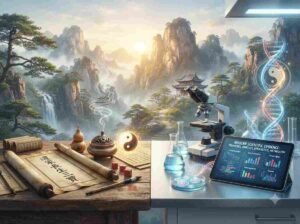
But here’s the question nobody seems to ask: can AI actually make you live longer? The honest answer is yes — and no. Yes, because it’s transforming how we discover medicines, measure aging, and personalize health. Some even assumed that in ten years AI could cure all diseases…. And no, because the biggest levers of a long, vital life still live inside your own body — and no machine can pull them for you. AI can draw you a perfect map of longevity. Only you can walk the road.

What AI Is Already Doing for Longevity
Start with drug discovery. In 2025, Nature Medicine published the results of rentosertib (formerly ISM001-055), the first drug whose target was found — and whose molecule was designed — entirely by generative AI. In a randomized, placebo-controlled Phase IIa trial of 71 patients with idiopathic pulmonary fibrosis (an age-related lung disease), the 60 mg dose improved lung function by +98.4 mL in 12 weeks, while placebo declined by -20.3 mL. Just as striking: AI compressed target-to-clinic development from the industry average of 4.5 years to 18 months, testing fewer than 80 molecules instead of thousands.
AI is also changing how we measure aging itself. Researchers are using machine learning to read biomarkers such as C-reactive protein, IGF-1, IL-6, and GDF-15 — not as isolated numbers, but as patterns that reveal “biological age,” the true pace of aging inside your body, which often differs from your birthday. Review articles in Frontiers in Aging (2025, 2026) describe how AI can now screen clinical-trial participants, predict drug responses with up to 85% accuracy, and integrate multi-omics data to identify new anti-aging targets.
The pace is quickening. In 2026, Peking University researchers unveiled AURORA, a generative deep-learning framework that can rebuild a seven-modality “virtual atlas” of your molecular landscape — transcriptome, metabolome, microbiome and more — from a single routine health check-up, or even a facial photograph, validated across more than 420,000 people. Chinese scientists released a “Digital Aging Twin” that tracks how individual organs age at different rates, while Austrian researchers showed that AI “tissue clocks” can read biological age straight from microscope slides across 25,000+ tissue samples. And an exploratory 2026 analysis of the rentosertib trial found that six independently developed proteomic aging clocks all pointed the same way: predicted biological age drifted younger in treated patients. All preliminary — small cohorts, early-stage medicine — but the direction of travel is unmistakable.

The Paradox: AI Can’t Do the Work for You
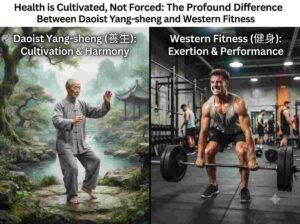
And yet, the most powerful longevity interventions ever studied have one thing in common: they require your body to show up. Fasting. Breathing. Movement. Stillness. Connection. No algorithm can fast for you, breathe for you, calm your nervous system for you, or hug someone for you. AI can give you a perfect map — but only you can walk the road.
This is exactly where Daoism’s three great longevity arts, refined over more than two millennia, become more relevant than ever. They are not “ancient remedies” to be replaced by technology; they are a training system for the one thing technology cannot do: cultivate your own vitality. At their heart lie three very human powers — self-discipline (自律), self-healing (自愈), and self-love (自爱) — and no algorithm can hand you any of them.
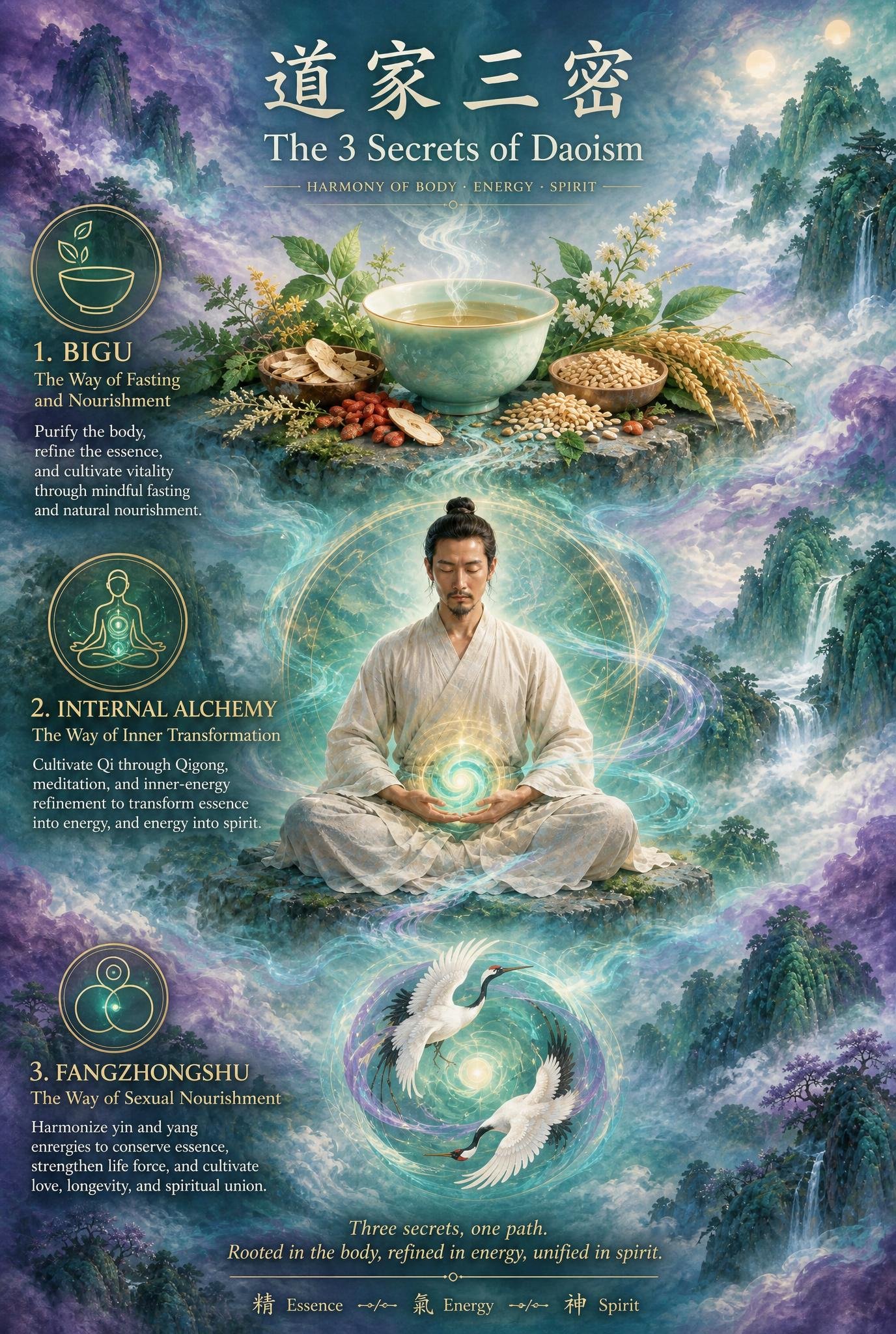
The First Secret: Bigu (辟谷) — Self-Discipline as Self-Repair
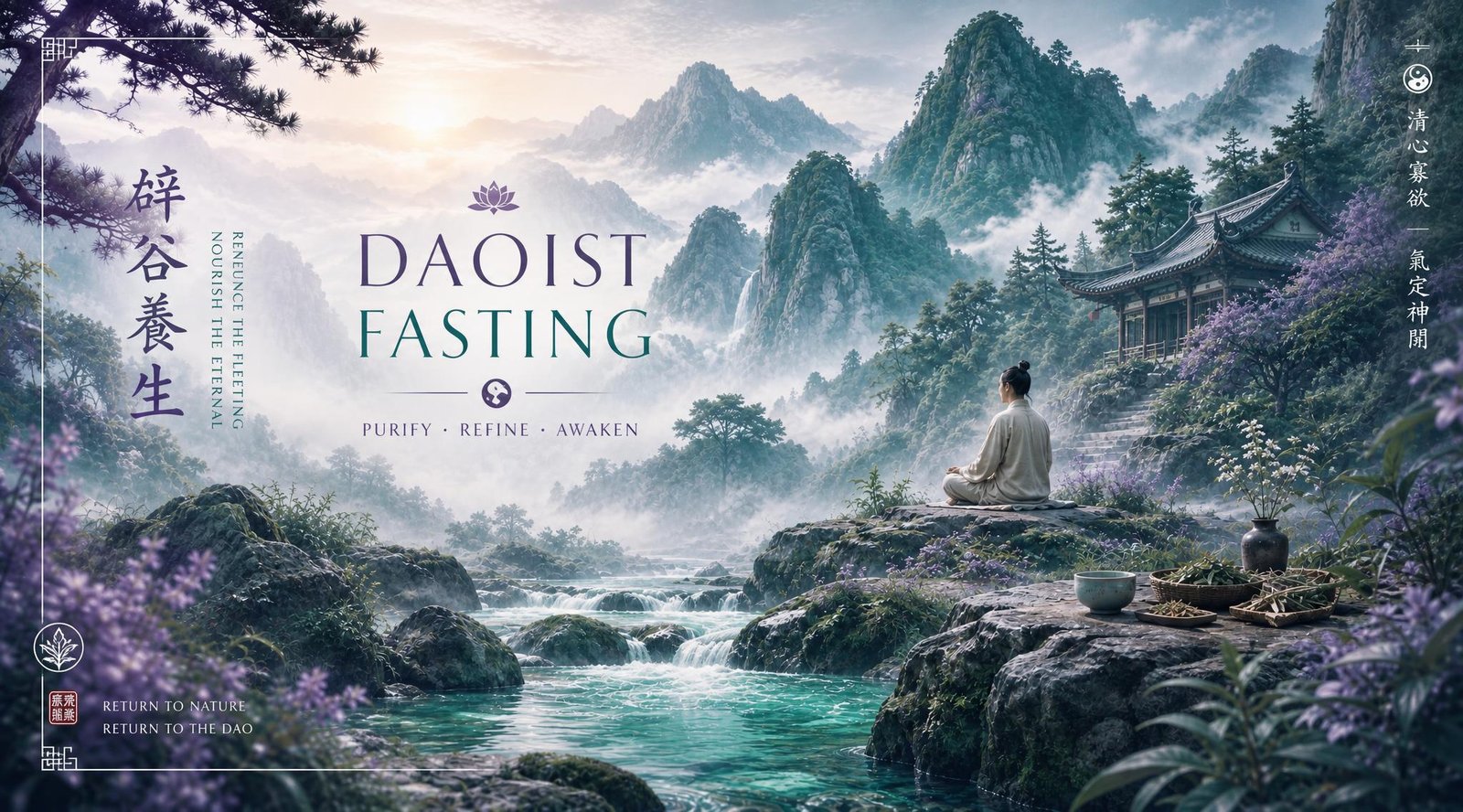
Bigu (辟谷), often mistranslated as “fasting,” is really the art of teaching the body to feed itself. Daoist adepts describe the state of 气满不思食 — “when qi is full, hunger naturally recedes.” Modern science calls it autophagy: the cellular recycling process that clears damaged components and turns your own body into a repair workshop. What makes it a longevity practice is not the technique alone — it is the discipline to show up, meal after meal, season after season, when every app on your phone is begging you to eat on demand.
In 2025, a randomized controlled trial in Nature Communications followed 41 middle-aged adults with overweight through six months of intermittent fasting. Participants lost about 8% of body weight and 16% of body fat, with significant improvements in non-HDL cholesterol and triglycerides — while fasting glucose, insulin, and blood pressure remained stable. A 2026 review in Frontiers in Nutrition traced how intermittent fasting modulates “immunosenescence” and “inflammaging” — the low-grade chronic inflammation that accelerates biological aging — through shifts in insulin, IGF-1, mTOR, AMPK, and SIRT1 signaling. The body recalibrated itself. No app can do that for you. The hunger, the metabolic switch, the quiet cellular cleanup: these are experiences only your body can have, and they are exactly what build long-term metabolic flexibility — one disciplined choice at a time.
The Second Secret: Qigong & Neidan (气功与内丹) — Self-Healing Through Practice
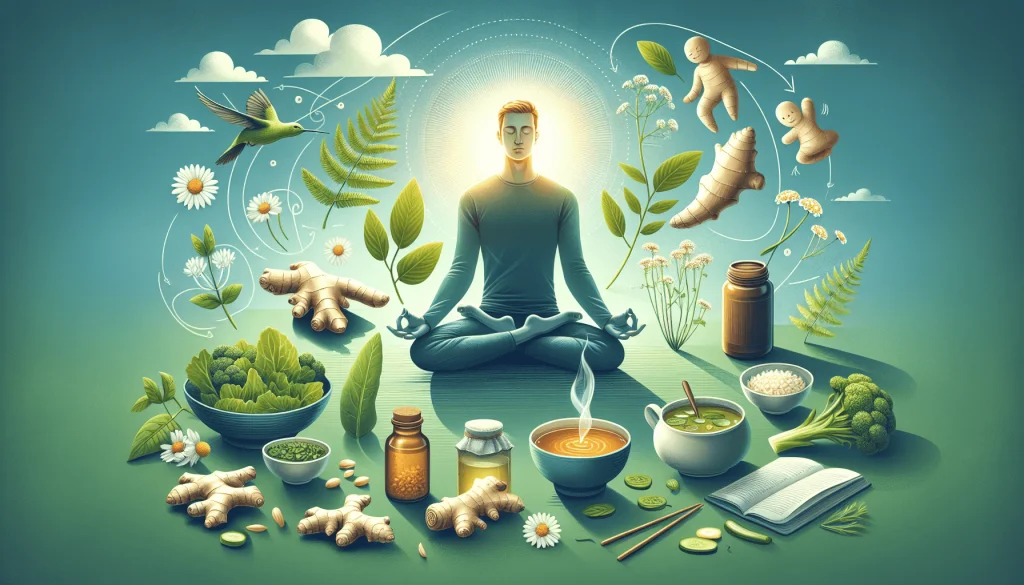
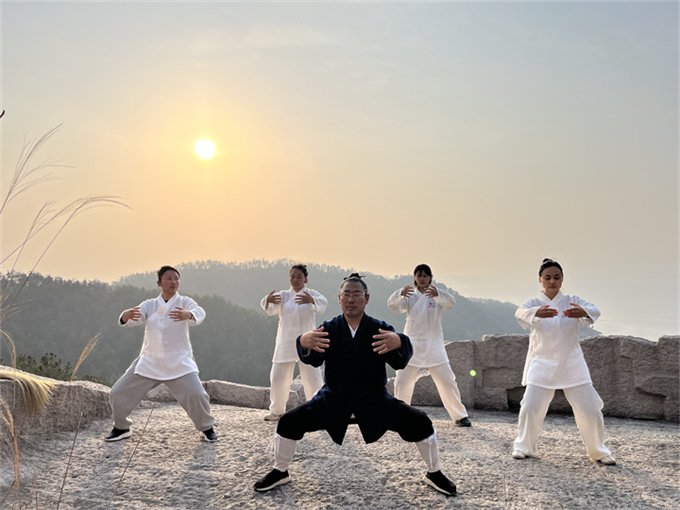
The second secret is neidan (内丹), Internal Alchemy, most accessible through qigong. Its curriculum is simple and profound: refine jing (精, essence) into qi (气, vital energy), qi into shen (神, spirit), and shen back into emptiness — 炼精化气,炼气化神,炼神还虚. Qigong is the movement-based doorway into this practice of “dual cultivation of body and mind” (性命双修).
The science is catching up. A 2025 randomized controlled trial in Age and Ageing followed 226 older cancer survivors through 16 weeks of Baduanjin qigong and found significant improvements in multidimensional frailty severity, physical performance, and quality of life. A 2025 meta-analysis in Frontiers in Physiology reported that regular exercise significantly preserved telomere length (SMD 0.59, p = 0.01) and boosted telomerase activity (SMD 0.35, p < 0.00001). A 2025 secondary analysis of the Age-Well randomized trial in Biological Psychiatry: Global Open Science found that among 137 older adults, it was not merely “meditating” but how much people actually practiced that correlated with telomere protection (r = 0.45). And a 2026 systematic review in Frontiers in Public Health concluded that Health Qigong improves quality of life, physical function, and mental health in older adults — recommending “high frequency, long duration, and moderate session length” as the recipe. In plain words: the repair work is yours to do, and the dose is practice.
This is the deepest insight of all: the benefit belongs to the doer. AI can measure your heart-rate variability and nudge you to breathe — but it cannot experience the shift in your nervous system for you. Emotional regulation, stress resilience, inner stillness: these are skills your body-mind must learn, one practice at a time.
The Third Secret: Fangzhongshu (房中术) — Self-Love: Turning Your Most Vital Energy into Longevity
The third secret is the most misunderstood — and the most transformative: fangzhongshu (房中术), the art of the bedchamber. In popular imagination it means “secret techniques,” “energy harvesting,” or indulgence. Read the classics, and something far more interesting appears. Daoist masters treated sexual energy not as a pleasure to be maximized but as the body’s most concentrated vitality — a strategic reserve of jing (精, essence), the very substance from which a new life can be created. The question was never “how often?” but “where does the energy go?”
The Daoist answer: it can be spent outward in a single burst — or, in a body whose meridians have been opened (大周天, the great circulation), it can be turned inward and refined. The practice known as coitus reservatus (交而不射), “union without emission,” is not, as often caricatured, brute suppression. It is a trained neural-energetic skill: at the moment of peak arousal, breath and intention close a “gate” (大锁金关, the Great Lock), and rising energy is redirected upward along the spine to nourish the brain and marrow (还精补脑). The old saying 黄河倒流 — “the Yellow River flows backward” — pictures energy that would have been lost being reinvested in the body’s deepest repair systems.
Modern biology is beginning to look in the same direction. Sexual experience triggers cell proliferation and neurogenesis in the hippocampus — the brain’s center for memory and mood — in adult male rats, via the body’s own opioid signaling (PLOS ONE, 2026). DHEA, the “youth hormone” precursor that peaks in our twenties and declines with age, shows neuroprotective, anti-inflammatory, and immune-modulating actions across the nervous system (International Journal of Molecular Sciences, 2025). This does not “prove” the ancient alchemy point for point — the honest claim is humbler: reproductive energy, the nervous system, and the body’s stem-cell repair networks are deeply connected, and Daoist practice may be one of the oldest technologies for switching the whole organism into repair-and-renewal mode — what the classics called returning to youthfulness (还老返童).
And that is why the third power is best named self-love (自爱); self-love asks what you are willing to invest in yourself. To practice fangzhongshu is to stop treating your most vital energy as disposable — and to treat your own body as worth cultivating, protecting, and nourishing. Loving connection matters too: the WHO’s 2025 Commission on Social Connection estimates that isolation is linked to roughly 871,000 premature deaths a year, and stable intimacy measurably lowers cortisol and raises oxytocin. But the deepest layer of the art is a one-person revolution: the decision that the energy which could create another life is also the energy that can renew yours. AI can measure your hormones and remind you to breathe. It cannot feel desire rise and choose where that energy goes. It cannot build the nervous-system control, the mindfulness, or the self-respect this art demands. The most intimate work of longevity remains, stubbornly and beautifully, yours alone.
The Map and the Road
So here is my invitation. Use the new science. Let AI monitor your biomarkers, find patterns you would miss, and personalize your plan. This is genuinely exciting — we live in the first era where aging is measurable and modifiable. But do not outsource your longevity to a machine. The deepest levers — self-discipline, self-healing, self-love — are trained, not downloaded.
That is why we practice. Our Longevity Qigong & Bigu program — starting this October — teaches the three secrets the way they were meant to be learned: slowly, with guidance, in community. You’ll learn to fast with support, move your qi with skill, and reconnect with the intelligence your body has carried all along.
Come join our weekly qigong for health and longevity practice, you can learn more about this subject…. https://daosecrets.net/qigong/
The machine can show you the way. Only you can walk it.
References
- Ren, F., et al. (2025). A generative AI-discovered TNIK inhibitor for idiopathic pulmonary fibrosis: a randomized phase 2a trial. Nature Medicine. (rentosertib / ISM001-055)[https://insilico.com/news/tnrecuxsc1-insilico-announces-nature-medicine-publi]
- Frontiers in Aging (2025). Biomarker integration and biosensor technologies enabling AI-driven insights into biological aging.[https://www.frontiersin.org/journals/aging/articles/10.3389/fragi.2025.1703698]
- Frontiers in Aging (2026). Advances in anti-aging drug research leveraging multi-omics and artificial intelligence.[https://www.frontiersin.org/journals/aging/articles/10.3389/fragi.2026.1868486]
- Barve, R. A., et al. (2025). Cardiometabolic and molecular adaptations to 6-month intermittent fasting in middle-aged men and women with overweight. Nature Communications, 16, 11370.[https://doi.org/10.1038/s41467-025-66366-8]
- Cheung, D. S. T., et al. (2025). The effect of qigong on frailty in older cancer survivors: a randomised controlled trial. Age and Ageing, 54(7), afaf184.[https://doi.org/10.1093/ageing/afaf184]
- Sun, L., et al. (2025). Exercise delays aging: evidence from telomeres and telomerase. Frontiers in Physiology, 16, 1627292.[https://doi.org/10.3389/fphys.2025.1627292]
- Kaliman, P., et al. (2025). Effect of an 18-month meditation training on telomeres in older adults: a secondary analysis of the Age-Well randomized controlled trial. Biological Psychiatry: Global Open Science, 5(1), 100398.[https://doi.org/10.1016/j.bpsgos.2024.100398]
- World Health Organization (2025). Social connection linked to improved health and reduced risk of early death.[https://www.who.int/news/item/30-06-2025-social-connection-linked-to-improved-heath-and-reduced-risk-of-early-death/]
- Peking University Center for Quantitative Biology (2026). AURORA: AI unification and reconstruction of omics reassembly atlas. Cell Metabolism. [https://cqb.pku.edu.cn/info/1065/5693.htm]
- Aging Biomarker Consortium, Chinese Academy of Sciences (2026). Digital Aging Twin: a computational framework to predict biological age and track organ aging. [https://english.cas.cn/newsroom/research-news/202605/t20260509_1158637.shtml]
- CeMM / LBI-NetMed (2026). AI-based tissue clocks measure the biological age of human organs. [https://www.news-medical.net/news/20260814/AI-based-tissue-clocks-measure-the-biological-age-of-human-organs.aspx]
- Insilico Medicine (2026). AI-designed drug candidate reverses biological age in clinical study (exploratory analysis of the rentosertib Phase IIa trial). [https://www.news-medical.net/news/20260907/AI-designed-drug-candidate-reverses-biological-age-in-clinical-study.aspx]
- Frontiers in Nutrition (2026). Intermittent fasting and immune aging: implications for immunosenescence, inflammaging, neuroinflammation, and frailty. [https://www.frontiersin.org/journals/nutrition/articles/10.3389/fnut.2026.1736969/full]
- Liang, S.-h., et al. (2026). Effects of Health Qigong on quality of life, physical function, and mental health in older adults: a systematic review and meta-analysis of randomized controlled trials. Frontiers in Public Health, 14, 1916466. [https://doi.org/10.3389/fpubh.2026.1916466]
- Bedos, M., et al. (2026). Mating-induced neurogenesis and cell proliferation in male rats depend on opioid signaling. PLOS ONE.[https://journals.plos.org/plosone/article?id=10.1371/journal.pone.0329795]
- Lin, H.-Y., Chen, J.-H., & Chen, K.-H. (2025). The sex hormone precursors dehydroepiandrosterone (DHEA) and its sulfate ester form (DHEAS): molecular mechanisms and actions on human body. International Journal of Molecular Sciences, 26(17), 8568.[https://pmc.ncbi.nlm.nih.gov/articles/PMC12429729/]
Further Reading
- Ancient Texts vs. Modern Scientific Evidence — How we bridge two thousand years of Daoist practice with peer-reviewed research.[https://daosecrets.net/ancient-texts-vs-modern-scientific-evidence/]
- The Misunderstood Art of Sexual Wellness — A deeper look at fangzhongshu (房中术) and the science of connection.[https://daosecrets.net/the-misunderstood-art-of-sexual-wellness/]
Note: This article is for educational purposes and does not replace medical advice. Consult your healthcare provider before beginning any fasting, qigong, or wellness program.