

Daoist yang-sheng, or “nourishing life,” presents health as a practice of harmony, moderation, and long-term self-cultivation rather than forceful optimization. The article contrasts this approach with Western fitness models centered on measurable performance, intensity, competition, and physical adaptation.
It describes the Daoist Three Treasures—jing, qi, and shen—and emphasizes gentle movement, stillness, emotional balance, seasonal living, and moderate eating. Longevity is presented as a byproduct of conserving vitality and living in alignment with natural rhythms.
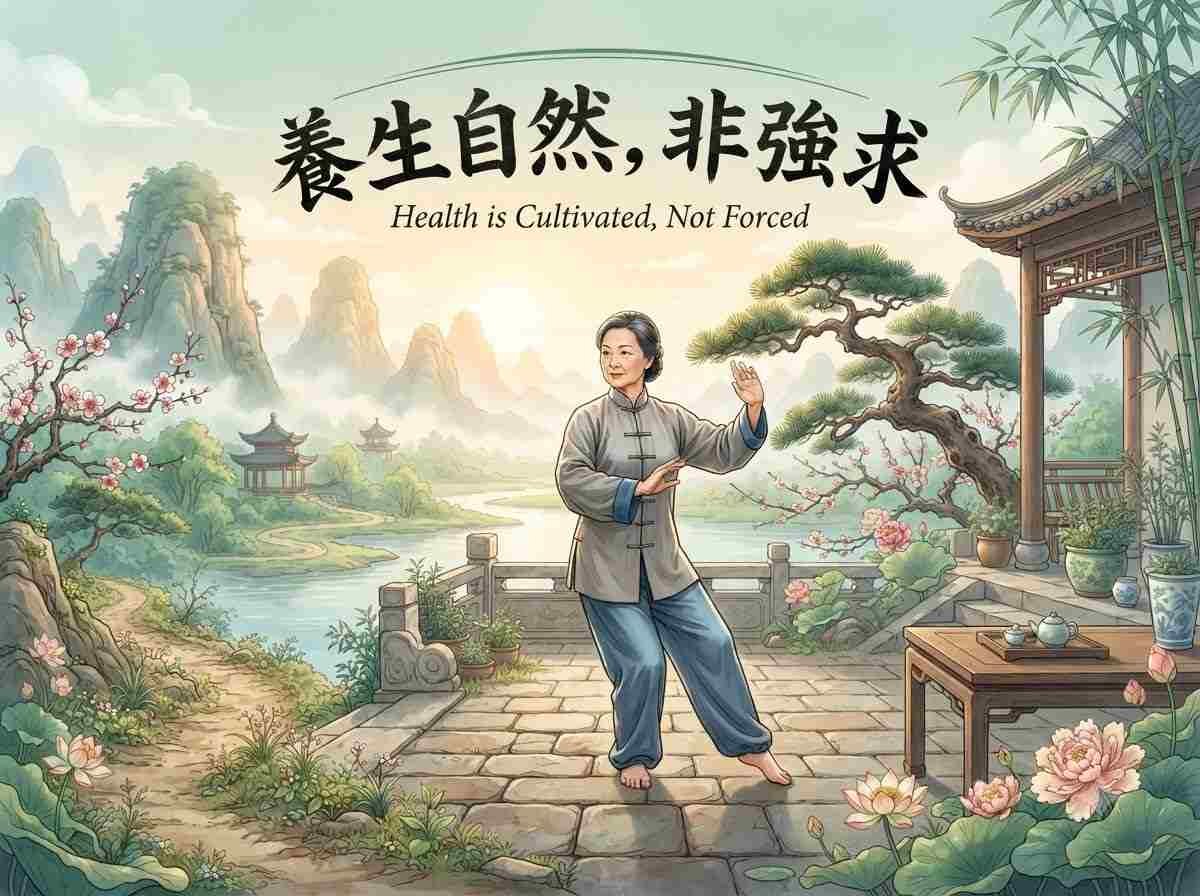
Health is Cultivated, Not Forced: The Profound Difference Between Daoist Yang-sheng and Western Fitness
Health is Cultivated, What It Really Means to “Nourish Life” (養生, Yǎngshēng) As a retired professor of medical science and a long-term practitioner of Daoist cultivation, I have had the unique opportunity to observe the human pursuit of health from two profoundly different vantage points. On one side, I have witnessed the extraordinary advancements of Western medicine and the modern fitness industry—a world defined by metrics, optimization, and the relentless pursuit of peak performance. On the other, I have immersed myself in the ancient wisdom of Daoist Yǎngshēng (養生), or “Nourishing Life”—a philosophy rooted in harmony, moderation, and the quiet art of self-cultivation.
In Chinese, Yǎngshēng simply means to care for life in a way that supports health, vitality, and longevity over time. It is not a technique, nor is it a treatment; it is a comprehensive way of living. While the modern world often focuses on illness and repair, Yǎngshēng asks a different, more fundamental question: How do we live so that health is maintained, not constantly recovered?
The goal of this article is to articulate the core principles of Daoist Yǎngshēng and, more importantly, to draw a clear, illuminating contrast between this ancient practice and the prevailing Western paradigm of fitness and exercise. The difference is not merely one of method—it is a difference in fundamental philosophy, purpose, and the very definition of a healthy life.
I. The Philosophical Divide: Harmony vs. Optimization
The most significant distinction between Yǎngshēng and Western fitness lies in their foundational philosophical goals.
The Daoist Goal: Harmony and the Golden Mean
In classical Chinese thinking, health is defined as a state of harmony—a dynamic balance between the body, mind, emotions, and the external environment. When this balance is maintained, health arises naturally. When harmony is disturbed, illness appears.
This concept is deeply rooted in the core Daoist principles of Yīn and Yáng and the idea of Zìrán (自然), or “natural spontaneity.” The practice of Yǎngshēng is an effort to align oneself with the Dào (道), the natural order of the universe. This alignment is achieved through the principle of moderation, often referred to as the “Golden Mean.”
Harmony does not mean perfection. It means moderation. Not too much. Not too little. Not excessive. Not deficient.
This principle applies universally: to food, to exercise, to emotions, to work, and even to thought. The Daoist seeks a state of Wú Wéi (無為), often translated as “effortless action” or “non-doing.” This does not mean laziness, but rather acting in perfect alignment with the natural flow, avoiding unnecessary struggle or force. In health, Wú Wéi means allowing the body to regulate itself through gentle, consistent support, rather than imposing one’s will upon it through brute force.
The Western Goal: Optimization and the Pursuit of Extremes
The Western approach to fitness, while diverse, is largely driven by a philosophy of optimization and competition. Its roots can be traced back to the ancient Greek ideal of the physically perfect athlete, and its modern expression is heavily influenced by the scientific method and the capitalist drive for constant improvement.
The body is often viewed as a machine—a complex system of measurable parts (muscles, heart rate, calories) that can be engineered, pushed, and optimized for peak performance. The goals are typically external and quantifiable: a lower body fat percentage, a faster marathon time, a heavier lift, or a longer lifespan measured in years.
This paradigm often encourages the pursuit of extremes:
- “No Pain, No Gain”: The belief that progress requires pushing past comfort and enduring suffering.
- Biohacking: The use of technology and intense, often radical, interventions to manipulate biological processes.
- Competitive Spirit: The drive to be “higher, faster, stronger,” which, as historical analysis shows, is a core philosophical difference from the Chinese focus on internal harmony [1].
The Western model often views the body as something to be conquered or mastered, whereas the Daoist model views the body as something to be cooperated with and cultivated.

II. The Internal Architecture: Jing, Qi, and Shen
To understand the practice of Yǎngshēng, one must first grasp the Daoist model of human energy, which is centered on the Three Treasures (Sān Bǎo, 三寶): Jīng, Qì, and Shén. Western fitness, focused on material substance, has no direct equivalent for this internal, energetic architecture.
| Daoist Treasure | Translation | Location & Function | Yǎngshēng Practice | Western Equivalent (Closest) |
| Jīng (精) | Essence | Stored in the Kidneys; the foundational, inherited life-force, responsible for growth, reproduction, and regeneration. | Conserving energy through moderation, adequate sleep, and sexual restraint. | Genetic potential, cellular health, and hormonal balance. |
| Qì (氣) | Vitality/Life-Force | Circulates throughout the body via meridians; the dynamic energy that powers all physiological processes. | Cultivating and moving Qì through Qigong, Tai Chi, and deep breathing. | Metabolism, cardiovascular function, and general energy level. |
| Shén (神) | Spirit/Mind | Resides in the Heart; consciousness, wisdom, and emotional stability. | Calming the mind through meditation, ethical living, and emotional balance. | Mental health, cognitive function, and emotional intelligence. |
The entire practice of Yǎngshēng is the art of conserving Jīng, transforming Jīng into Qì, and refining Qì into Shén. Longevity and health are seen as the direct result of maintaining the integrity and balance of these three treasures.
In contrast, Western fitness primarily addresses the physical body (the “vessel” of Jīng and Qì) through material means—nutrition (fuel), exercise (stress), and rest (repair). While effective on a physical level, it often overlooks the subtle, energetic dimension of Qì and the profound influence of Shén (the spirit/mind) on physical health, which the Daoist tradition places at the center of cultivation.
III. Movement and Cultivation: The Internal vs. The External
The most visible difference between the two paradigms is in their approach to physical movement.
The Daoist Path: Cultivation, Slowness, and Internal Refinement
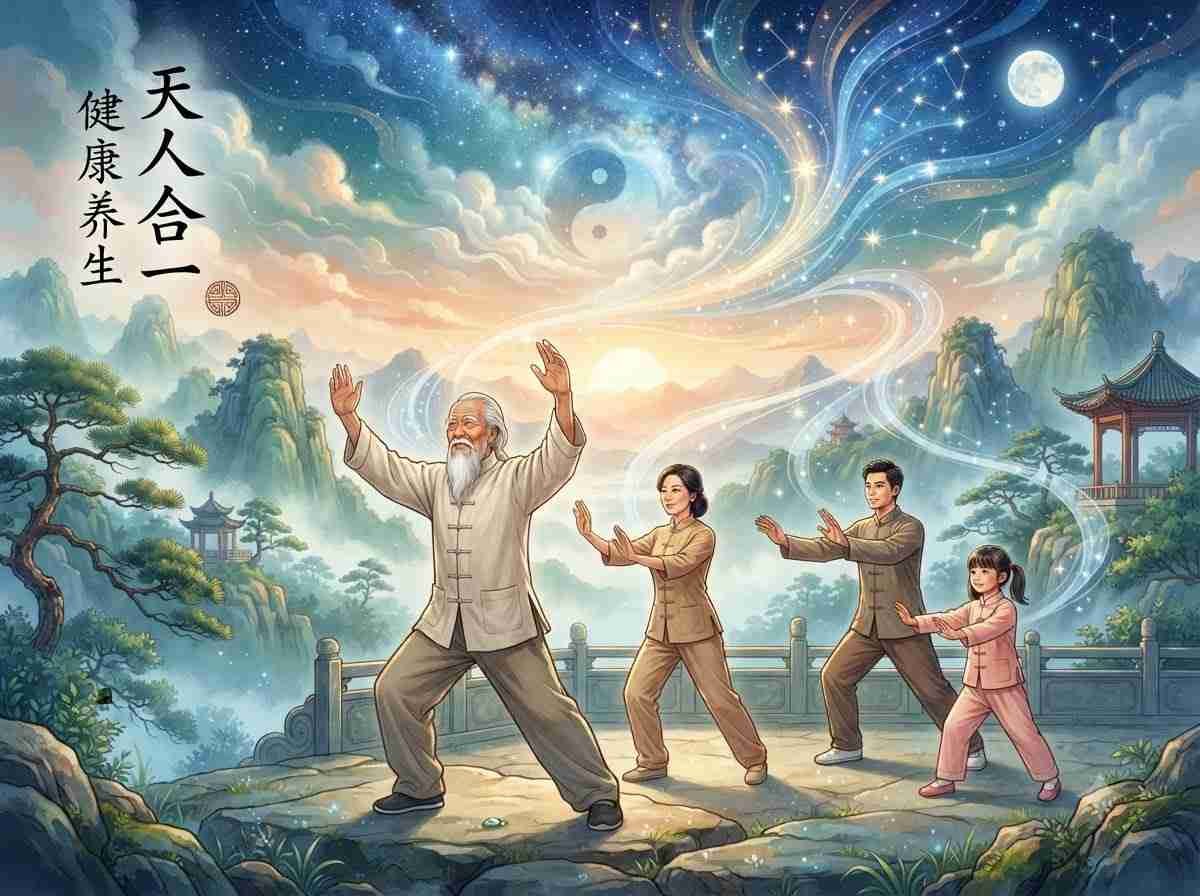
Daoist movement practices, such as Qigong (氣功) and Tàijíquán (太極拳), are forms of internal alchemy. They are not designed to build large, external muscles or to push the heart rate to its maximum. Their purpose is threefold:
- Regulate Qì: To open the meridians, clear blockages, and ensure the smooth, harmonious flow of Qì throughout the body.
- Harmonize Yīn and Yáng: To balance the active (Yáng) and passive (Yīn) forces within the body, promoting equilibrium.
- Refine Shén: To integrate the mind with the movement, leading to a calm, focused, and stable spirit.
The methodology is characterized by:
- Slowness and Gentleness: Movements are slow, continuous, and circular. This low-impact approach preserves Jīng (essence) and avoids the excessive wear and tear that can deplete the body over time. The goal is efficiency and longevity, not momentary power.
- Intentionality (Yì, 意): The mind is actively engaged, guiding the Qì through the body. The focus is internal—on the feeling of energy, the breath, and the subtle changes in the body—rather than external form or performance.
- Unification of Form and Spirit: As the research indicates, Chinese sports emphasize the unification of form and spirit, where the subtle beauty of internal feeling externalizes through the body’s movements [1].
This is cultivation, not control. Through gentle, consistent practice, the body learns to regulate itself. The nervous system settles. The body begins to make better choices on its own—about rest, food, and activity.
The Western Path: Force, Intensity, and External Performance
Western fitness, particularly in its modern, high-intensity forms, is primarily focused on external performance and measurable physical change.
The methodology is characterized by:
- Intensity and Force: Practices like weightlifting, high-intensity interval training (HIIT), and competitive sports are designed to stress the body to its limit. The goal is to create micro-tears in muscle tissue (hypertrophy) or to maximize cardiovascular capacity. This is a deliberate act of forcing the body to adapt.
- Material Focus: The emphasis is on the large muscle groups, the physical structure, and the metabolic process. Success is measured by external metrics: weight lifted, distance run, or calories burned.
- The “Engine” Metaphor: Western philosophy often views the body as an engine, where vigor is defined by the energy generated through the metabolism of physical bodies and the creation of tension [1]. The goal is to maximize the engine’s output.
While this approach is highly effective for building strength, speed, and endurance, it carries a philosophical risk: it can lead to a disconnect between the mind and the body, treating the body as a tool to be driven rather than a garden to be tended. The relentless pursuit of “more” can lead to the depletion of Jīng and the exhaustion of Qì, resulting in burnout, injury, and long-term imbalance.
IV. The Context of Health: Living in Harmony with the Cosmos
A critical component of Daoist Yǎngshēng that is almost entirely absent from the Western fitness model is the concept of harmony with the cosmos—the necessity of aligning one’s life with the rhythms of nature, the seasons, and the environment.
The Daoist Calendar: Seasonal Living
Daoist philosophy asserts that the human body is a microcosm of the universe. Just as the seasons change, so too must our lifestyle adapt to maintain internal balance. This is the practice of Seasonal Yǎngshēng.
| Season | Daoist Principle | Organ/Element | Lifestyle Adaptation |
| Spring (生, Shēng) | Growth and Birth | Liver/Wood | Movement: Gentle stretching, Qigong to move stagnant Qì. Diet: Light, fresh, green, and slightly pungent foods to support the Liver’s outward energy. Emotion: Cultivate patience and avoid excessive anger. |
| Summer (長, Zhǎng) | Expansion and Flourishing | Heart/Fire | Movement: More active, but not exhausting, outdoor activity. Diet: Cooling foods, bitter flavors. Emotion: Cultivate joy and avoid over-excitement, which can deplete the Heart Shén. |
| Autumn (收, Shōu) | Harvest and Contraction | Lung/Metal | Movement: Practices that strengthen the breath (e.g., deep breathing exercises). Diet: Moistening foods (pears, honey) to counteract dryness. Emotion: Cultivate acceptance and avoid excessive sadness or grief. |
| Winter (藏, Cáng) | Storage and Rest | Kidney/Water | Movement: Minimal, gentle movement; focus on stillness and conservation. Diet: Warming, rich, and nourishing foods (stews, root vegetables). Emotion: Cultivate stillness and avoid excessive fear, which depletes Kidney Jīng. |
The Daoist practitioner understands that attempting to train for a marathon in the depth of winter, or eating a heavy, warming diet in the peak of summer, is an act of fighting nature. It is a depletion of the body’s resources, which must be conserved for the natural cycle.
The Western Context: The Year-Round Machine
The Western fitness model, by contrast, is largely a-seasonal. The gym is a climate-controlled environment where the intensity of training and the composition of the diet remain largely the same regardless of the month. The focus is on maintaining a consistent, optimized output, which often requires the body to work against its natural, seasonal inclination to rest or expand.
This disconnect from natural rhythms is a significant philosophical blind spot. While modern science acknowledges the impact of circadian rhythms, the Daoist perspective extends this rhythm to the entire year, viewing the failure to adapt as a chronic, low-grade stressor that gradually erodes the Three Treasures.
V. The Cultivation of the Mind: Shen and the Role of Stillness
The user’s original article correctly identified that Yǎngshēng includes three inseparable aspects: the body, the mind, and the spirit. The cultivation of the mind (Shén) is arguably the most critical distinction from a purely physical fitness regimen.
The Daoist Mind: Stillness and Emotional Moderation
Daoist cultivation holds that the mind (Shén) is the supreme commander of the body. Long-term emotional strain, mental unrest, or chronic stress are seen as the primary causes of disease, as they deplete Qì and disturb the harmony of the internal organs.
The practice of Yǎngshēng therefore places immense value on meditation and stillness (靜, Jìng). The goal is not merely stress reduction (as often framed in the West), but the achievement of a deep, unmoving calm that allows the Shén to be clear and bright.
The Daoist approach to emotions is one of moderation and transformation:
- The Seven Emotions (joy, anger, sadness, worry, grief, fear, fright) are natural, but when they become excessive, prolonged, or suppressed, they become pathogenic.
- Cultivation is the process of observing these emotions without attachment, allowing them to flow through without creating internal turbulence. This is the ultimate form of self-regulation.
The Western Mind: Performance and Stress Management
While Western medicine increasingly recognizes the importance of mental health, the modern fitness industry often treats the mind as a tool for physical performance—a source of motivation, focus, and willpower to push through physical barriers.
When the mind is addressed, it is often through the lens of stress management—a reactive measure to cope with the demands of a high-pressure, optimized lifestyle. The focus is on coping mechanisms rather than the fundamental cultivation of stillness and spiritual clarity that defines the Daoist approach.
The Daoist seeks to eliminate the source of the internal turbulence, while the Western approach often seeks to build a stronger mental shield to withstand the turbulence.
VI. The Practice of Moderation: Diet and Lifestyle
The principle of the Golden Mean (Zhōng Yōng, 中庸) profoundly shapes the Yǎngshēng approach to diet and daily life, standing in stark contrast to the often-dogmatic and restrictive nature of modern Western diets.
Daoist Diet: Timeliness, Warmth, and Balance
The Daoist diet is not a list of forbidden foods or a set of rigid macronutrient ratios. It is a set of principles designed to support the digestive system (Pí, Spleen/Stomach) and conserve Qì.
- Timeliness: Eating according to the body’s natural clock and the seasons. The largest meal should be consumed when the digestive Qì is strongest (mid-day).
- Warmth: A strong emphasis is placed on consuming warm or cooked foods. Cold, raw foods and iced drinks are seen as damaging to the Qì of the Spleen/Stomach, forcing the body to expend precious Qì to warm and process the food.
- Moderation (Bā Fēn Bǎo, 八分飽): The practice of eating until one is only 80% full. This prevents the digestive system from becoming overloaded, ensuring that Qì is not excessively diverted to digestion, leaving the rest of the body depleted.
- Local and Seasonal: Eating foods that are locally grown and in season, as these are naturally aligned with the body’s seasonal needs.
Western Diet: Restriction, Metrics, and Optimization
The Western diet paradigm is often characterized by:
- Restriction: The proliferation of highly restrictive diets (Keto, Paleo, Vegan, etc.) that focus on eliminating entire food groups based on a materialist, biochemical understanding of nutrition.
- Metrics: An obsession with counting calories, grams of protein, and macronutrient ratios—a purely quantitative approach that often ignores the energetic and qualitative nature of food.
- Supplementation: A reliance on external supplements (vitamins, protein powders, performance enhancers) to compensate for perceived deficiencies or to force the body into a state of optimization.
While Western nutrition has provided invaluable scientific data, the Daoist perspective cautions that this focus on material metrics can lead to a state of internal struggle and anxiety, which itself is a depletion of Shén. The Daoist seeks a peaceful, intuitive relationship with food, guided by the body’s subtle signals and the principle of moderation.
VII. Longevity: A Byproduct, Not a Goal
The final, and perhaps most beautiful, distinction lies in the ultimate purpose of the practice.
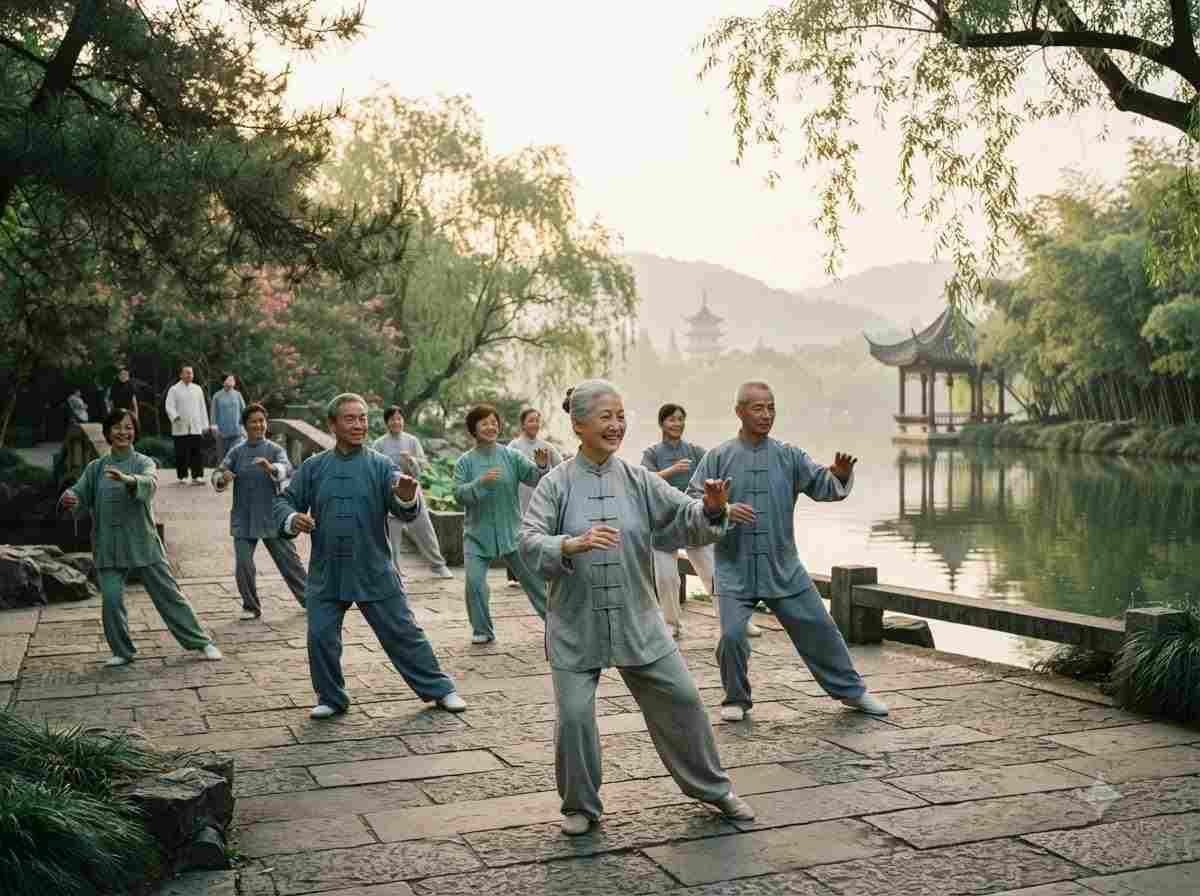
In traditional Daoist teachings, the purpose of Yǎngshēng has always been health and longevity. However, longevity is not achieved by chasing it directly. It emerges naturally when life is lived in a balanced way—when the Three Treasures are conserved, when the mind is calm, and when one lives in harmony with the natural world.
Longevity is a Byproduct, Not a Goal.
When practice is consistent, when desire is moderated, when the mind is calm and clear, vitality is preserved. Strength becomes efficiency. Aging becomes refinement rather than decline. Longevity, in this sense, is not about extending life at all costs through radical intervention; it is about living well at every stage, ensuring that the quality of life (Qì) remains high until the very end.
The Western pursuit of longevity, often termed “anti-aging,” can sometimes be characterized by a fear of death and a desire to halt the natural process of decline. This is a form of resistance—a struggle against the Dào. The Daoist, by contrast, embraces the cycle of life and death, seeking to live fully and harmoniously within that cycle.
Conclusion: A Quiet Invitation to Cultivation
The journey of Yǎngshēng is a quiet invitation to return to the self and to the natural world. It does not require dramatic, unsustainable change. It begins with attention—with reducing excess, with choosing practices that can be sustained over a lifetime, and with a philosophical shift from forcing to cultivating.
For those who have spent their lives in the Western paradigm of optimization and high-intensity effort, the Daoist path offers a profound sense of relief and a deeper, more sustainable form of vitality. It is a reminder that the greatest strength is not found in the maximum weight lifted, but in the quiet, unmoving center of the spirit.
Key Takeaways: The Art of Nourishing Life (Yang-sheng)
- Cultivation Over Control: Unlike Western fitness, which often treats the body as a machine to be “optimized” or “forced” into performance, Daoist Yang-sheng views health as a garden to be cultivated through gentle, consistent cooperation with nature.
- The Three Treasures (Jing, Qi, Shen): True vitality depends on the harmony of our three internal energies: Jing (physical essence), Qi (vital energy), and Shen (spirit/mind). Longevity is the result of conserving these treasures rather than depleting them through excess.
- The Power of Moderation: The “Golden Mean” is the ultimate rule of Daoist health. Whether in diet, exercise, or emotion, the goal is to avoid extremes. As the saying goes: “Not too much, not too little; not excessive, not deficient.”
- Internal Alchemy vs. External Force: While Western exercise focuses on external muscle and cardiovascular stress, practices like Qigong and Tai Chi are forms of “internal alchemy” designed to clear energetic blockages and refine the spirit through slow, intentional movement.
- Living with the Seasons: Health is not a-seasonal. To maintain balance, we must adapt our movement, diet, and even our emotions to the natural rhythms of the year—conserving energy in the winter and allowing for gentle expansion in the spring.
- The Mind as the Commander: In Daoist medicine, chronic emotional strain is a primary cause of physical disease. Cultivating “Stillness” (Jing) and emotional moderation is just as critical to health as physical movement or nutrition.
- Longevity as a Byproduct: Longevity should never be chased directly through radical interventions. Instead, it emerges naturally as a byproduct of a life lived in harmony with the Dao. When we stop fighting life and begin cooperating with it, health grows quietly on its own.
1: The Professional & Academic Hook
Headline: Why Modern Fitness is Missing the Point: A Medical Professor’s Perspective on Daoist Yang-sheng.
As a retired medical school professor, I have spent decades studying the mechanics of the human body. But it was my long-term practice in Daoist cultivation that taught me how to truly nourish it.
In my latest article, I explore the profound divide between the Western “optimization” mindset—focused on force, metrics, and intensity—and the ancient Daoist philosophy of Yang-sheng (養生).
True health isn’t a goal to be forced; it’s a harmony to be cultivated. From the “Three Treasures” of Jing, Qi, and Shen to the art of seasonal living, I’m sharing why the “Golden Mean” is the ultimate key to longevity.
2) The Personal & Reflective Hook (Best for Facebook/Personal Blog)
Headline: Health is Cultivated, Not Forced.
We are living in an era of “biohacking” and high-intensity workouts, where the body is often treated like a machine to be mastered. But what if the secret to vitality isn’t in doing more, but in living in harmony with the Dao?
Drawing from my background in medicine and years of Daoist practice, I’ve written a comprehensive guide on the art of Nourishing Life.
In this piece, I break down: ✨ Why “No Pain, No Gain” can actually deplete your vital essence (Jing). ✨ How to align your lifestyle with the seasons. ✨ The power of stillness and emotional moderation.
If you’ve ever felt burnt out by modern fitness trends, this reflection is for you.
3) The Short & Punchy “Teaser” (Best for Stories or Quick Posts)
Is your fitness routine depleting you? 🧘♂️
Most Western exercise focuses on external performance, but Daoist Yang-sheng focuses on internal refinement. As a former medical professor and practitioner, I’m sharing the “Three Treasures” approach to health that goes beyond the gym.
Check out my latest long-form article on the profound difference between forcing health and cultivating it.